PeptideGod vs Real Peptides: Brand Comparison
PeptideGod and Real Peptides compared on the same products. We check pricing, vial sizes, COA visibility and what each product page actually shows.
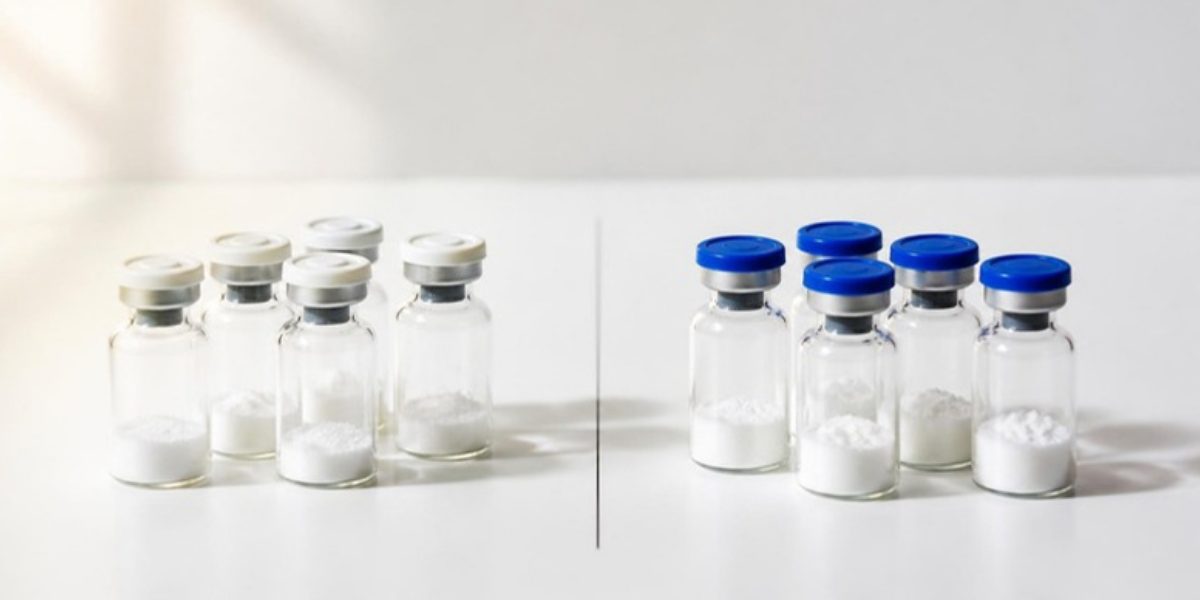
The peptide suppliers PeptideGod and Real Peptides are among prominent US suppliers of peptide products. They have products in common, BPC-157 and MOTS-C. However, the two companies differ in terms of the provided certificate of analysis, the price list and the amount of information that they give on their product pages. In this comparison, we rely solely on what is provided on the product pages of the two suppliers. If a product page does not give a certificate of analysis, purity and the amount of product in milligrams, that is indicated on this page. There is no assumption from what is missing from the product page. To get more information about the overall situation on the peptide market, please visit our best BPC-157 and brands directory pages.
What Differs Between PeptideGod and Real Peptides
Product Page Transparency
The main distinction lies in the information that a vendor provides in the product page prior to the purchasing decision.
The product pages of PeptideGod include the price, a photo of the product, the peptide's brief description and an add-to-cart button. Detailed information such as the purity level, quantity of milligrams per vial, Certificate of Analysis, and endotoxin testing are not included on the product pages. This applies to all the products in their entire catalog: BPC-157, TB-500, BPC-157 + TB-500 combination, MOTS-C, Ipamorelin and Epithalon.
The product pages of Real Peptides provide: cost, milligram quantity per vial (10 mg for all listed products), HPLC purity of 99% or more, published Certificate of Analysis per batch, and availability of endotoxin screening along with SKU number for each product. This applies for the whole catalog which includes: BPC-157 (RP-BPC10V), MOTS-c (RP-MOTS10V), Tesamorelin (RP-TESA10V), and Tesamorelin + Ipamorelin mix (RP-TESAIPA103V).
| Information Shown on Page | PeptideGod | Real Peptides |
|---|---|---|
| Price | Yes | Yes |
| Product image | Yes | Yes |
| Milligram amount per vial | Not shown | 10 mg (all products) |
| Purity percentage | Not shown | ≥99% HPLC |
| Certificate of Analysis | Not shown | Published per lot |
| Endotoxin screening | Not shown | Yes |
| SKU / lot reference | Not shown | Yes |
| Product description | Basic | Detailed |
Price Comparison
Sticker Price by Product
PeptideGod puts out better prices overall for similar products. For instance, PeptideGod's BPC-157 is $34.95, while Real Peptides sells this for $43.20. If we consider MOTS-C, PeptideGod is selling it at $49.95, while Real Peptides has a price of $43.20. So in the case of MOTS-C, Real Peptides has a better price.
| Product | PeptideGod Price | Real Peptides Price |
|---|---|---|
| BPC-157 | $34.95 | $43.20 (10 mg, SKU RP-BPC10V) |
| MOTS-C | $49.95 | $43.20 (10 mg, SKU RP-MOTS10V) |
| BPC-157 + TB-500 Blend | $59.95 | Not offered |
| TB-500 | $35.00 | Not offered |
| Ipamorelin | $39.95 | Not offered standalone |
| Epithalon | $29.95 | Not offered |
| Tesamorelin | Not offered | $45.60 (10 mg, SKU RP-TESA10V) |
| Tesamorelin + Ipamorelin Blend | Not offered | $43.20 (SKU RP-TESAIPA103V) |
Price per Milligram - The Real Comparison
The price that appears on the sticker may not coincide with the actual price if the vial size varies or is unknown. According to Real Peptides, its products contain 10 milligrams in every vial. This implies that the price of BPC-157 is $4.32 per milligram, the price of MOTS-c is also $4.32 per milligram, and the price of Tesamorelin is $4.56 per milligram.
Products on the PeptideGod website do not list the amount of milligrams for a product. So the price per milligram cannot be determined. Accordingly, if PeptideGod's BPC-157 vial contains 5mg of the peptide, the cost would be $6.99 per milligram, which is actually a 62% increase from Real Peptides prices. Should the vial be of 10 mg, the cost would come to $3.50 per milligram, which is affordable. Nevertheless, none of these options could be confirmed through the product page.
Product Range Comparison
PeptideGod Catalog
PeptideGod lists 6 products: BPC-157 ($34.95), BPC-157 + TB-500 blend ($59.95), TB-500 ($35.00), MOTS-C ($49.95), Ipamorelin ($39.95) and Epithalon ($29.95). The catalog is broader. It includes standalone TB-500, a blend product and 2 peptides (Ipamorelin, Epithalon) that Real Peptides does not carry as standalone items. None of the 6 product pages show a COA, a purity percentage or a milligram amount. For our review of their flagship product, see our PeptideGod BPC-157 page.
Real Peptides Catalog
Real Peptides has four items: BPC-157 10 mg ($43.20, SKU RP-BPC10V), MOTS-c 10 mg ($43.20, SKU RP-MOTS10V), Tesamorelin 10 mg ($45.60, SKU RP-TESA10V) and Tesamorelin + Ipamorelin blend ($43.20, SKU RP-TESAIPA103V). The catalog is smaller, lacking standalone TB-500, Epithalon, or Ipamorelin. All four product pages feature verified COAs with HPLC purity at or above 99% and endotoxin screening. If you’d like to read about the BPC-157 review by us, here’s Real Peptides BPC-157 page.
| Product | PeptideGod | Real Peptides |
|---|---|---|
| BPC-157 | $34.95, no COA on page | $43.20 (10 mg), COA published |
| TB-500 | $35.00, no COA on page | Not offered |
| BPC-157 + TB-500 Blend | $59.95, no COA on page | Not offered |
| MOTS-C | $49.95, no COA on page | $43.20 (10 mg), COA published |
| Ipamorelin | $39.95, no COA on page | Available in blend only |
| Epithalon | $29.95, no COA on page | Not offered |
| Tesamorelin | Not offered | $45.60 (10 mg), COA published |
| Tesamorelin + Ipamorelin Blend | Not offered | $43.20, COA published |
What Cannot Be Verified
PeptideGod - Unverifiable Information
In the absence of a published COA, any PeptideGod item’s purity cannot be verified by the customer beforehand. The absence of milligram information prohibits the calculation of the amount of substance in the vial and the price per milligram. The absence of endotoxin screening results does not allow for the assessment of contamination risk. The product page does not list COAs for any of the 6 items. However, this does not mean that the items are not pure. It means that the purity cannot be verified based on any available information publicly.
Real Peptides - What Remains Unverified
Real Peptides releases certificate of analysis documents, but we have not conducted independent testing of their products in a third party lab. A certificate of analysis is only as good as the laboratory and chain of custody. The product page contains documentation of this nature, but whether all of the vials shipped matched the certificate of analysis cannot be known without independent testing.
Why Documentation Matters for Research Peptides
Peptides sold in an unregulated market carry inherent uncertainty. A product may contain the stated peptide at the advertised purity, or it may contain impurities. A certificate with HPLC data and endotoxin levels reduces uncertainty but does not eliminate it. The absence of any certificate means uncertainty has not been addressed at all. For researchers conducting controlled experiments, undocumented reagents are unsuitable.
FAQ - PeptideGod vs Real Peptides
Which brand has better purity documentation?
Real Peptides. A separate Certificate of Analysis is available on every product page, reporting a minimum of 99% purity alongside screening results for endotoxins, while PeptideGod doesn’t display any of these important documents on all product pages. If purity documentation is a requirement, Real Peptides is the stronger option based on this comparison.
Is PeptideGod cheaper than Real Peptides?
In the case of the sticker prices for BPC-157, it is $34.95 compared to $43.20. However, in the case of MOTS-C, the price is $49.95 against $43.20. One cannot tell anything regarding the price per milligram as the amount of milligrams per vial is not stated on any page of the PeptideGod website. However, Real Peptides lists 10 mg in each vial of its products. So not knowing the milligram content makes it impossible to deduce if a lower sticker price implies a lower cost in reality.
Does PeptideGod test their products?
The product pages do not display a Certificate of Analysis, indicate a purity percentage, or name a testing lab. Our review can only assess information visible on the product page. No public evidence exists either confirming or denying that testing is performed.
Which brand has a wider product range?
The PeptideGod inventory includes 6 products, while Real Peptides has 4. PeptideGod has TB-500, combination of BPC-157 and TB-500, Ipamorelin, and Epithalon, which are absent in the catalog of Real Peptides. In return, Real Peptides carries Tesamorelin and a combination of Tesamorelin and Ipamorelin, which PeptideGod does not have. There is an overlap in products of BPC-157 and MOTS-C only.
Which brand should I choose?
This depends on your individual priorities. If you require that purity documentation be available, milligram specifications provided, and endotoxins tested, Real Peptides meets this requirement, while PeptideGod does not according to information on its website. If you are seeking TB-500, BPC-157 with TB-500, or Epithalon, then only PeptideGod offers these products. If inexpensive BPC-157 is what you want and documentation is of no importance, PeptideGod has it for $34.95, while Real Peptides sells it for $43.20. It would be advisable to check the product reviews at PeptideGod BPC-157 and Real Peptides BPC-157 before buying.

Compare the current picks
Prices, sizes and ratings side by side, updated when the merchant pages change.
See top picks