BPC-157 Gut Health Benefits: Study Findings
Published research on BPC-157 and the gut. We review the gastric lesion, IBS and intestinal barrier models, note which findings are animal-only, and cite every source.
Human gastric juice was used to isolate BPC-157. The first aim of the research was to find out if BPC-157 was suitable for gut protection. Several studies conducted on rats provided evidence supporting the use of BPC-157 in reducing damaged area in the stomach after administration of non-steroidal anti-inflammatory drugs (NSAIDs), alcohol, and under stress conditions. Some other tests carried out using different models were used in cases of gastrointestinal diseases such as colitis, intestinal fistulas, and ischemia-reperfusion pathology. There were no studies indicating the use of BPC-157 in humans. Every study published about BPC-157 was reviewed and its findings presented here with references to relevant articles.
Stomach Origin - Why BPC-157 Is Called a Gastric Peptide
BPC means Body Protection Compound. The peptide has been isolated from the protein part of human gastric juice by Predrag Sikiric's laboratory at the University of Zagreb. Its 15-amino-acid sequence, GEPPPGKPADDAGLV, was artificially created, i.e, it cannot be found as a separate molecule in a living organism. It was made after studying the properties of the peptides' mother protein in preliminary experiments.
Acid Stability
Most peptides degrade within minutes at gastric pH levels. BPC-157 remains stable for over 24 hours at pH 1-2 in laboratory conditions. This acid resistance is unusual and is one reason the peptide can be administered orally in animal protocols and still produce measurable effects in the gastrointestinal tract. A 2011 review described this stability as a defining characteristic that sets BPC-157 apart from other bioactive peptides.
- Origin
- Human gastric juice protein
- Acid stability
- >24 hours at pH 1-2
- GI models tested
- NSAID ulcer, ethanol lesion, colitis, fistula, ischemia
- Administration routes
- Oral, intraperitoneal, intragastric
- Human GI trials
- 0 completed
- Primary research group
- University of Zagreb
- Dose range in rats
- 10 ng/kg to 10 mcg/kg
NSAID-Induced Gastric Damage Models
NSAIDs (nonsteroidal anti-inflammatory drugs) are known to induce ulceration in the stomach due to the inhibition of cyclooxygenase enzymes, causing lower production of the stomach lining's prostaglandins. This results in lower blood supply to the gastric mucosa, impaired secretion of bicarbonate, and weakening of epithelial barriers. Researchers use NSAIDs to make similar and reproducible gastric lesions in rats.
Indomethacin and Diclofenac Studies
BPC-157 reduced gastric lesion area when administered before or after NSAID exposure in rats. The 2011 review by Sikiric et al. compiled results from multiple experiments using indomethacin, diclofenac and aspirin as the damaging agents. BPC-157 maintained mucosal vascular integrity, reduced inflammatory cell infiltration and preserved the thickness of the gastric mucosal layer. The protective effect was dose-dependent and appeared at microgram-per-kilogram concentrations.
Ethanol and Stress-Induced Lesions
Ethanol has a damaging effect on gastric epithelium via osmosis and toxicity. Restraint stress causes damage to gastric tissue by activating sympathetic nervous system and causing ischemia of the mucosa. BPC-157 was shown to have a protective effect in both cases of gastric injury. That means that peptide evidence in all three forms of damage supports the case for true cytoprotection by that peptide in the stomachs of rats. There were no signs of toxicity with any of the tested dosages.
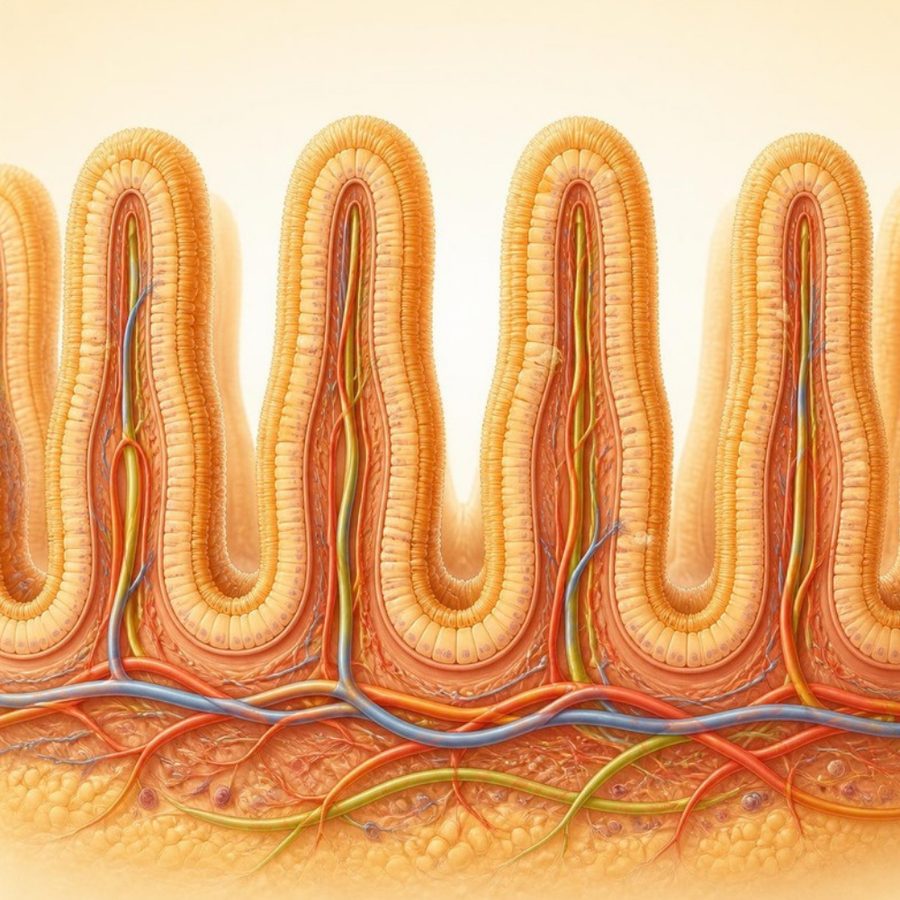
Inflammatory Bowel Disease Models
BPC-157 has undergone trials in rodent models which depict symptoms of ulcerative colitis and Crohn’s disease. These models use chemicals to trigger damage in colon and also inflammation.
Ulcerative Colitis Models
In a study by 2012 study, BPC-157 was tested in a rat model of ulcerative colitis induced by trinitrobenzene sulfonic acid (TNBS). The results showed that BPC-157 significantly reduced the colonic lesion scores as well as levels of inflammatory markers, which were also better histologically graded than in controls. It seems that the compound was effective through local and systemic administration. The TNBS model produces acute colonic inflammation that resembles human ulcerative colitis yet does not fully replicate the chronic relapsing course of the human disease.
Colitis-Ischemia Model
A 2018 study examined BPC-157 in a more severe model combining colitis with ischemic injury. The peptide reduced tissue necrosis and improved vascular parameters in the affected colon segments. This model tests the peptide's effects under conditions of simultaneous inflammation and blood supply disruption, which is relevant because ischemia plays a role in the progression of inflammatory bowel disease in humans.
IBS and Functional Gut Disorders
Irritable bowel syndrome (IBS) is a functional disorder defined by variations in motility, visceral sensitivity and alterations in the gut-brain axis. Unlike inflammatory bowel disease, IBS does not present any gross changes on endoscopy.
What the Data Does and Does Not Cover
There has been no research that specifically evaluated the effect of BPC-157 for IBS in any given organism. No published protocols testing BPC-157 in any IBS animal model were found. The existing research on the gut does, however, discuss the issue of structural damage of the tissue, such as ulcers, lesions, inflammation, and fistulas. While IBS has to do with motility and sensory disorders rather than tissue damage. A research conducted by #2006 study on gastric distension# showed that BPC-157 impacts mobility indices in the rat stomach, which could serve as a starting point. However, that is not evidence for treating IBS. The claims present in the internet that BPC-157 “treats IBS” lack sufficient published evidence.
Intestinal Permeability - The Leaky Gut Question
Increased intestinal permeability, commonly called "leaky gut," is widely discussed in alternative health circles. It refers to widened gaps between tight junctions of intestinal epithelial cells, allowing larger molecules to pass through the gut wall.
What Studies Actually Measured
BPC-157 studies examined mucosal integrity in acute damage models: NSAID-induced lesions, ethanol burns, and surgical fistulas. Preserving mucosal tissue and blood vessels in these injury models does not mean permeability is reduced in a healthy gut. Research by 2008 fistula-healing study has shown that BPC-157 is able to promote closure of intestinal fistulas thanks to the modulation of nitric oxide system, which proves barrier restoration in a context of severe damage. However, there is no data available regarding TEER or paracellular permeability markers in uninjured intestinal tissue after the treatment with BPC-157.
Oral vs. Injected BPC-157 for Gut Effects
Unlike most peptides, BPC-157 produces measurable effects in gut models when administered orally.
Route Comparison in Animal Studies
The 2011 review noted that both oral (intragastric) and parenteral (intraperitoneal) routes produced cytoprotective effects in gastric lesion models. For gut-specific conditions, oral delivery places the peptide directly at the site of damage. For the fistula-healing study, both oral and parenteral routes were effective. This dual-route efficacy is unusual for a peptide and has been cited as indirect evidence of absorption, though formal oral bioavailability data in humans does not exist. For more on oral administration, see our oral BPC-157 benefits page.
| Gut Model | Damage Agent | BPC-157 Route | Key Outcome | Source |
|---|---|---|---|---|
| Gastric ulcer | Indomethacin / ethanol | Oral and IP | Reduced lesion area, preserved mucosa | Sikiric 2011 |
| Gastric distension | Mechanical | IP | Affected motility parameters | Sikiric 2006 |
| Intestinal fistula | Surgical | Oral and IP | Fistula closure, NO system modulation | Sikiric 2008 |
| Ulcerative colitis | TNBS | Rectal and systemic | Reduced lesion scores, less inflammation | Veljaca 2012 |
| Colitis-ischemia | Combined model | Systemic | Reduced necrosis, improved vasculature | Sever 2018 |
Mechanisms Behind Gut Protection
Three mechanisms can be found throughout the gut literature. All are backed by facts but none of them has been shown to be the only causal pathway of cytoprotection.
Nitric Oxide System
BPC-157 regulates the NO pathway in a stabilizing manner. According to study 2008 fistula study, the peptide's healing effect has been attributed to the NO pathway activity. The effect of BPC-157 decreased somewhat with blockade of NO synthase, indicating that the NO pathway is one of the factors involved. NO is responsible for biochemical modulation of blood flow in mucosal tissues, mucus production, and the epithelial turnover.
Prostaglandin-Independent Cytoprotection
BPC-157 protects the gastric mucosa even when prostaglandin synthesis blockers (NSAIDs) are present. Hence, it proves that the peptide’s cytoprotective mechanism does not depend exclusively on the prostaglandin pathway like misoprostol and that the peptide probably works through a different protection mechanism that has not yet been fully elucidated.
Vascular Integrity
Maintaining blood flow to the layer of stomach mucosa during injuries to the stomach is very important. BPC-157 has preserved the microvascular integrity in experimental models that were introduced to NSAIDS and ethanol. This reduced bleeding and facilitated nutrient delivery to proliferating epithelial cells. These effects parallel the pro-angiogenic activity observed in wound healing and tendon and muscle injury models.
FAQ - BPC-157 Gut Health
Can BPC-157 heal a leaky gut?
No published study has measured intestinal permeability markers (such as TEER or lactulose-mannitol ratio) in BPC-157-treated tissue. Previous research showed the peptide maintained mucosal integrity during acute damage. Those studies did not address permeability changes in an otherwise healthy gut. The claim that BPC-157 can heal "leaky gut" is not supported by available research.
Does oral BPC-157 work for the stomach?
In studies using rat models, BPC-157 administered through the mouth was found to decrease the area of gastric lesions resulting from the intake of NSAID and ethanol. The 2011 review confirms the effectiveness of this method for gastric protection purposes. It is essential to emphasize that currently, only animal research data is available on the effectiveness of oral BPC-157. More information can be found on our oral BPC-157 page.
Is BPC-157 proven for IBS?
There are no studies available in literature that assess BPC-157 for irritable bowel syndrome in any type of organism. Irritable bowel syndrome is a kind of functional disorder that is associated with motility and sensory changes in the body and does not involve structural damage of tissues as BPC-157 studies regarding the gut do. No published evidence supports claims about BPC-157's effectiveness for irritable bowel syndrome.
What gut conditions has BPC-157 been tested for?
The animal trials of NSAID-induced ulcers, ethanol-induced gastric lesions, stress-induced gastric lesions, TNBS-induced colitis, combined colitis-ischemia, gastric distension and intestinal fistulas have been reported in the literature. All of the trials have been performed using rats as experimental animals. There have not been any human gastrointestinal studies conducted till date. You can find further details regarding this matter in our main BPC-157 benefits page.

Compare the current picks
Prices, sizes and ratings side by side, updated when the merchant pages change.
See top picks