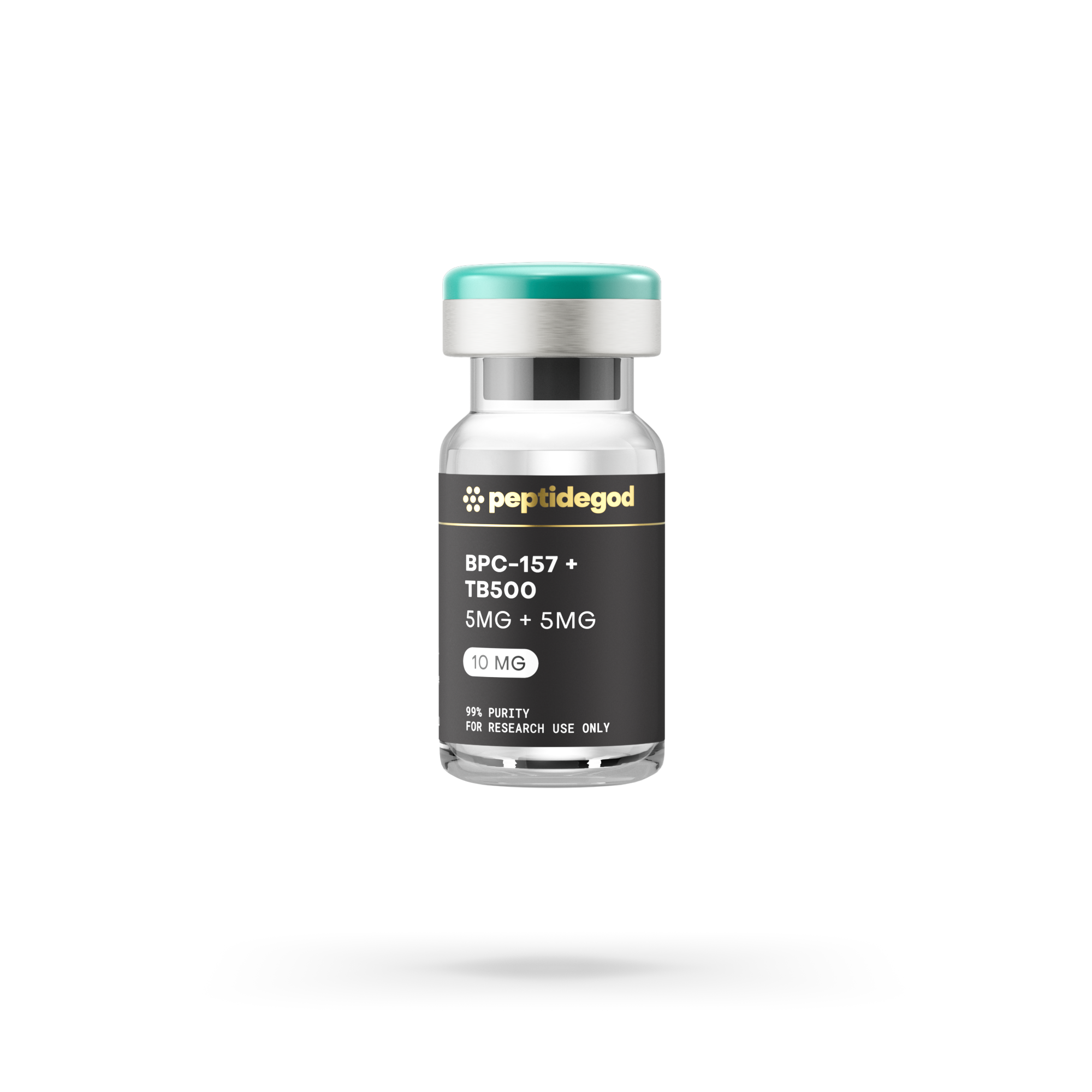
Combined BPC-157 and TB-500 blend from Peptide God at $59.95 per vial.
PeptideGod BPC-157 + TB-500 Blend Review
$59.95
Our rating 3.9/5
Price: $59.95 / Brand: Peptide God / Contents: BPC-157 + TB-500 / Availability: In stock
Our editorial review of the PeptideGod BPC-157 + TB-500 blend. Pricing, specs and what the product page shows vs. what it does not.
Two peptides in one vial for simplified research protocols
Competitively priced for a dual-peptide product
In stock at time of review
The product page does not show a COA or purity data
Individual peptide amounts per vial not stated on page
Key Features
- Price: $59.95 per vial
- Contents: BPC-157 + TB-500 blend
- Form: Lyophilized powder
- Public COA: None
- Peptide ratio: Not disclosed
- Availability: In stock
Buying BPC-157 ($34.95) and TB-500 ($35.00) separately from PeptideGod comes out to $69.95. Receiving the blend saves you $10.00. However, the downside of the blend is that you cannot determine the amount of each peptide once it has been reconstituted.
What's Inside
- BPC-157: 15-amino-acid synthetic pentadecapeptide derived from human gastric juice protein
- TB-500: Synthetic fragment of Thymosin Beta-4, involved in actin binding and cell migration
- Form: Combined lyophilized powder requiring reconstitution
There is no breakdown of milligrams available. There is no ratio given. Every pull from the vial contains both peptides in whatever ratio was used by the people who manufactured this product. This ratio is not disclosed to the person buying the product. The page does not include a certificate of analysis. There is no HPLC data or endotoxin testing available.
- Product
- PeptideGod BPC-157 + TB-500
- Price
- $59.95
- Contents
- BPC-157 + TB-500 Blend
- Form
- Lyophilized Powder
- Public COA
- None
- Peptide Ratio
- Not disclosed
- Editor Rating
- 3.9 / 5
How to Store and Handle
Maintain the closed container at a temperature of -20C for long-term preservation. 2-8C is enough for the preservation of a short-term period. The lyophilized sample can survive room temperature during shipping. It must be refrigerated or frozen once it arrives at its destination.
Inject bacteriostatic water slowly along the inner wall of the vial. Do not shake. Allow the powder to dissolve passively. Clean the stopper with alcohol before each draw. Keep the solution at 2-8 degrees Celsius. Use within 28 days. Concentration calculation cannot be performed due to the blend of peptides used together.
Check price at Peptide God
Sold and shipped by Peptide God. Price checked October 2026. We may earn a commission.
PeptideGod has a BPC-157 + TB-500 peptide formulation for the price of $59.95 a vial. The combination is in a single lyophilized cake. This particular PeptideGod product is in stock. However, the page with the product does not contain any COA. There is no information on the purity, individual mg amount, ratio of peptides, and information about endotoxin. The product listing has been analyzed, and the blend has been compared to other formulations sold in different vials.
Overview
This is a 2-peptide blend. BPC-157 is a 15-amino-acid synthetic fragment studied in preclinical models for tissue repair and mucosal protection. TB-500 is a synthetic fragment of Thymosin Beta-4, a 43-amino-acid peptide examined for wound healing and anti-inflammatory effects in animal research. Both peptides appear in the same vial as a combined lyophilized powder.
Both of the peptides have been mentioned in the listing; however, there is no mention of the milligram content of the individual compounds, their ratio, or any details concerning their analytical tests. For complete details regarding the differences between the two peptides, refer to our BPC-157 vs TB-500 comparison.
Our Verdict
PeptideGod BPC-157 + TB-500 has a score of 3.9 out of 5 in total. The components contribute 3.0 to testing, 3.0 to purity, 3.5 to labeling and 4.5 to value. The high value score reflects $10.00 in savings compared to buying 2 vials separately.
The advantages of this blend are clear, as it requires only 1 vial rather than 2, and costs $59.95 instead of $69.95. However, the downside is that it has no certificate of analysis, no purity figures, and no information regarding ratios of the active components. It is advisable for researchers needing precise control over concentration of peptides to purchase the standalone BPC-157 and the standalone TB-500 in different vials or buy from a supplier who provides certificates of analysis for every batch of this blended product.
Our rating
3.9out of 5
Rated by the BPC-157 Benefits editorial team, October 2026
Combined BPC-157 and TB-500 blend from Peptide God at $59.95 per vial.
Two peptides in one vial for simplified research protocols
Competitively priced for a dual-peptide product
In stock at time of review
The product page does not show a COA or purity data
Individual peptide amounts per vial not stated on page
FAQ
What is the BPC-157 to TB-500 ratio in this blend?
It is not revealed. Both names of the peptides can be found on the product page, but there is no information about the amount or percentage of each. The ratio is set in the process of manufacturing and cannot be modified by the purchaser.
Is the blend cheaper than buying separately?
BPC-157 has a price of $34.95 and TB-500 has a price of $35.00 if bought separately from PeptideGod. Total price: $69.95. The combination will cost only $59.95. That's $10.00 saved but concentration cannot be controlled.
Can I control the dose of each peptide in the blend?
No. Both peptides are in the same lyophilized cake. Every draw from the vial contains both compounds in the fixed ratio set by PeptideGod. Separate vials are needed for independent concentration control.
Does PeptideGod provide a COA for this blend?
The COAs are not available on the product page. HPLC data, endotoxin results, and third-party lab details are not indicated in the list as well. There is no way to verify the analytical information from the publicly available data.

Similar products